
Wealth and the Right to Choose
Death on the NileThe story examines how money gives Linnet freedom and influence, but also makes her vulnerable and encourages others to treat people as possessions.
increasing Bearing strength in each event
 decreasing
Bearing strength in each eventdecreasingA Fortune in Public View
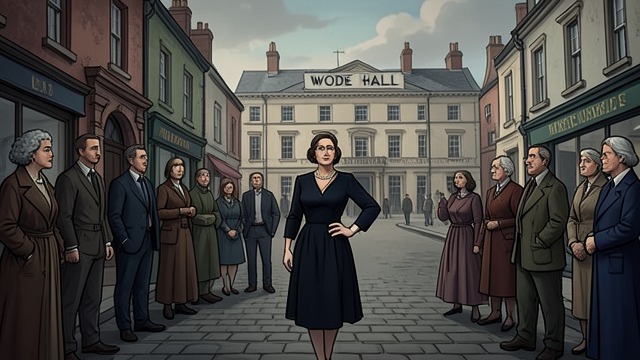
Money as Spectacle
The town’s fascination
Observers discuss Linnet’s fortune and the renovations planned for Wode Hall as if her wealth were a public event. Her arrival appears capable of transforming the whole town.
A social assumption
The townspeople’s admiration reveals how readily money is confused with personal worth. Linnet’s privilege gives her a freedom few around her can imagine.
A Friend Without Means

Help and Dependence
Jacqueline’s request
Jacqueline asks Linnet to employ Simon because neither has secure financial prospects. Linnet can offer a job with ease, but the request also gives her access to the couple’s private future.
Power disguised as generosity
Linnet’s money allows her to help, yet it makes her intervention more consequential than she understands. The unequal position between the friends becomes part of the later betrayal.
A Husband’s Inheritance

Fortune Changes Hands
The trustee’s crisis
Linnet’s marriage alters who will control her fortune and threatens Pennington’s financial arrangements. Simon’s lack of business experience makes him appear easier to manipulate.
Money as motive
The inheritance attracts more than one kind of danger. Pennington seeks control, while Simon sees the possibility of wealth as a reason to murder his wife.
Luxury Cannot Protect

Trapped Despite Her Means
A private escape considered
Poirot points out that Linnet could have hired a private vessel, but she has avoided doing so partly because Simon feels uncomfortable with her spending. Money is available, yet their marriage complicates its use.
Insecurity beneath abundance
Linnet realizes that wealth cannot make her safe aboard a steamer surrounded by strangers. Her fortune offers choices, but it cannot undo past actions or guarantee affection.
The Cost of Possession

People Treated as Prizes
Linnet and Simon
Linnet’s wealth helps make her an object of desire and a target, while Simon’s ambition turns marriage into a route to money. Jacqueline’s belief that Linnet takes what she wants reflects the same logic of possession.
No bought security
The fortune cannot secure love, loyalty or life. By the ending, the characters who tried to possess wealth or one another have destroyed the futures they hoped to control.
At Malton-under-Wode, before the marriage
When Jacqueline asks for work for Simon
After Linnet marries Simon
During the Nile journey
After Poirot explains the conspiracy
